
As soon as I shipped off the box with my works for Tilisman in Perugia, my brain did what it always does after an important delivery. It instantly switched into new-project mode. I threw myself straight into embroidering a gorgeous pinhole photograph for an exhibition on slowness opening next year, curated by Barbara Pavan.
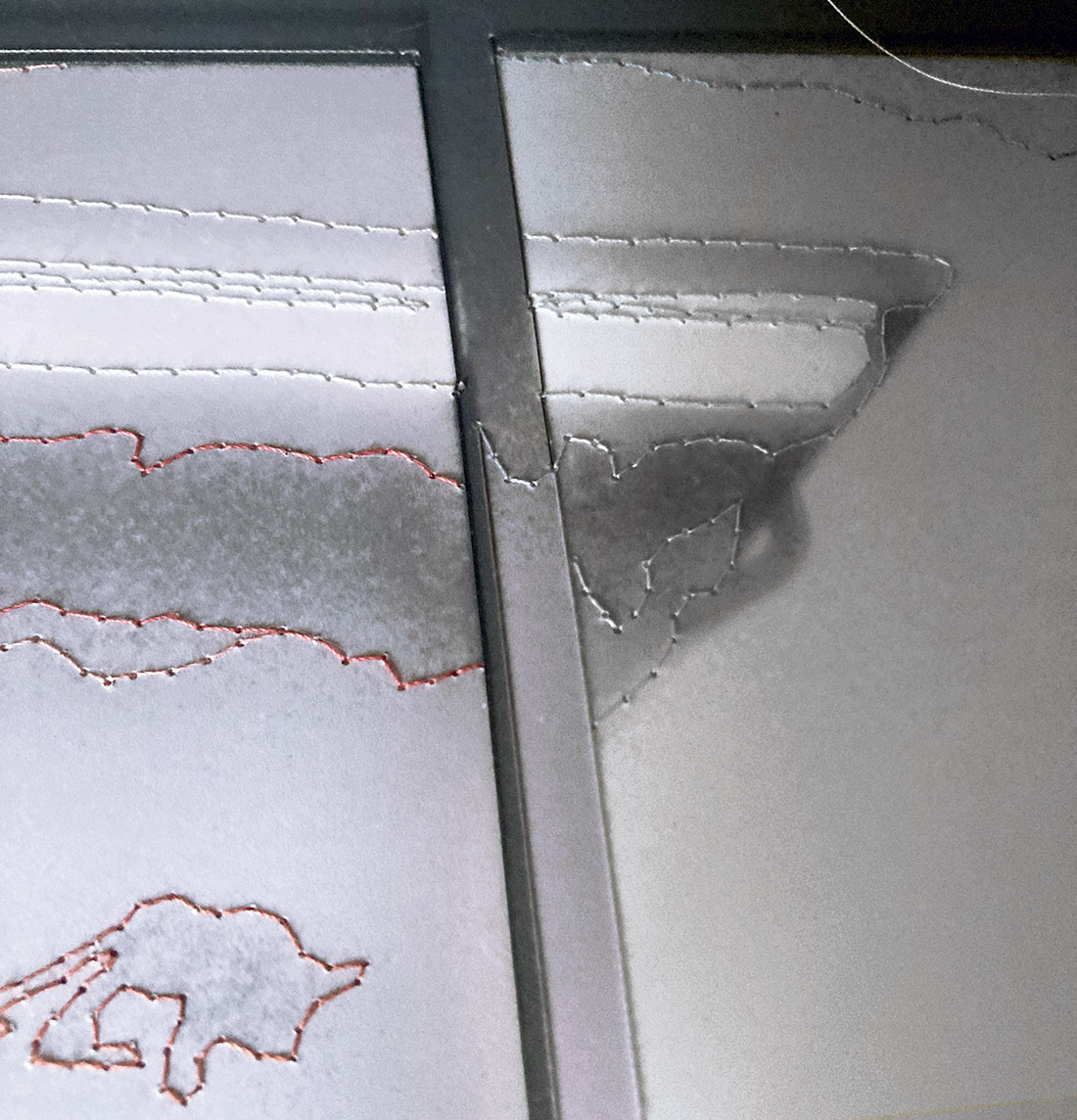
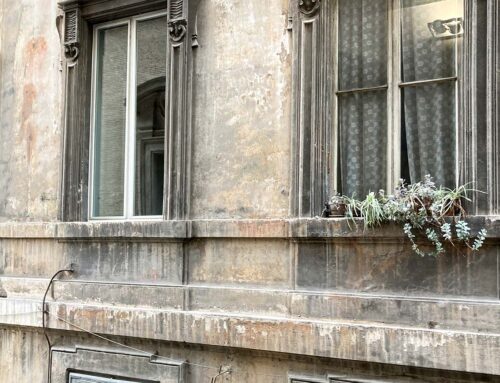
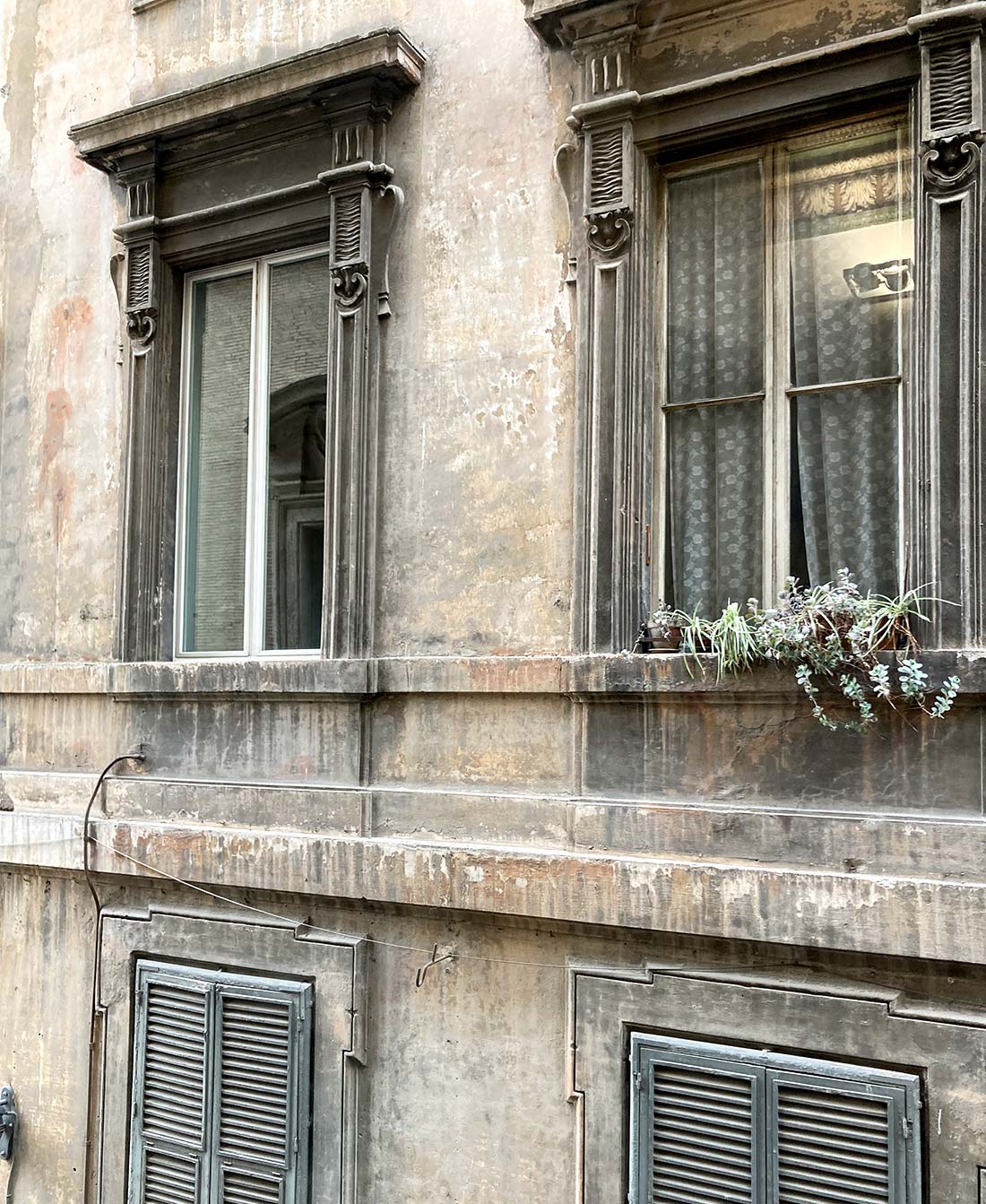
A dark building, two figures barely discernible behind large windows, and a suspended atmosphere that seemed to ask me to step inside on tiptoe. And, as almost always happens, I started embroidering without having the faintest idea where I was headed.
There’s a moment when the surface I’m working on begins to speak to me. A whisper from my memory and someone else’s, fragments of music, a tree moved by the wind, a domestic object suddenly lit by an unexpected detail. My hands go on their own, while the will—the part of me that wants to control everything—slowly steps back.
In that state of listening, a few frames from an old R.E.M. video rose up from the darkness of the image like a double exposure. Daysleeper; a dear Tuscan friend who lives in Paris reminded me of it a few days ago. I went back to watch that 1998 fragment: a world of night work under fluorescent lights and Japanese subway commuters suspended in an endless wait. It hit me that the same mood—quiet, alienating, fluorescent—was already living inside the photograph I was stitching.
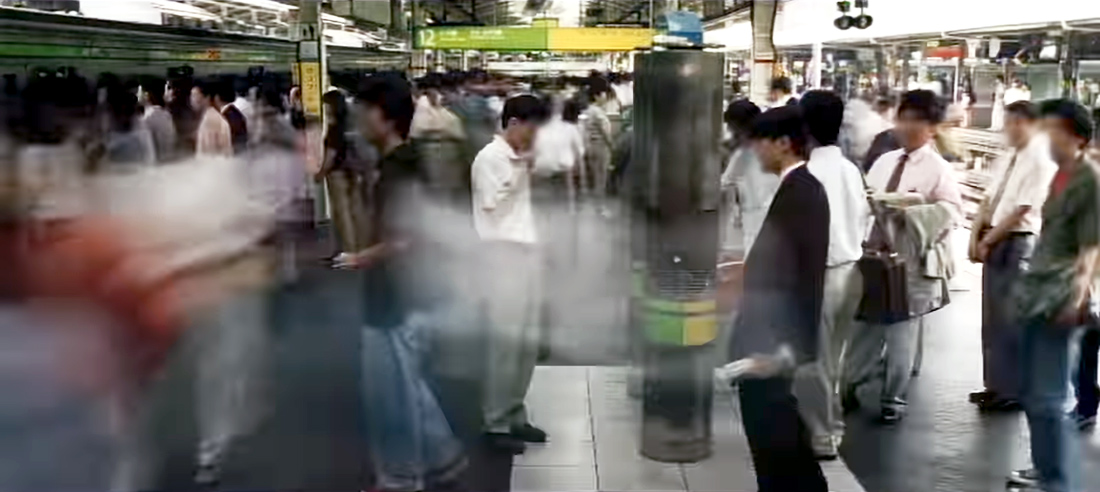
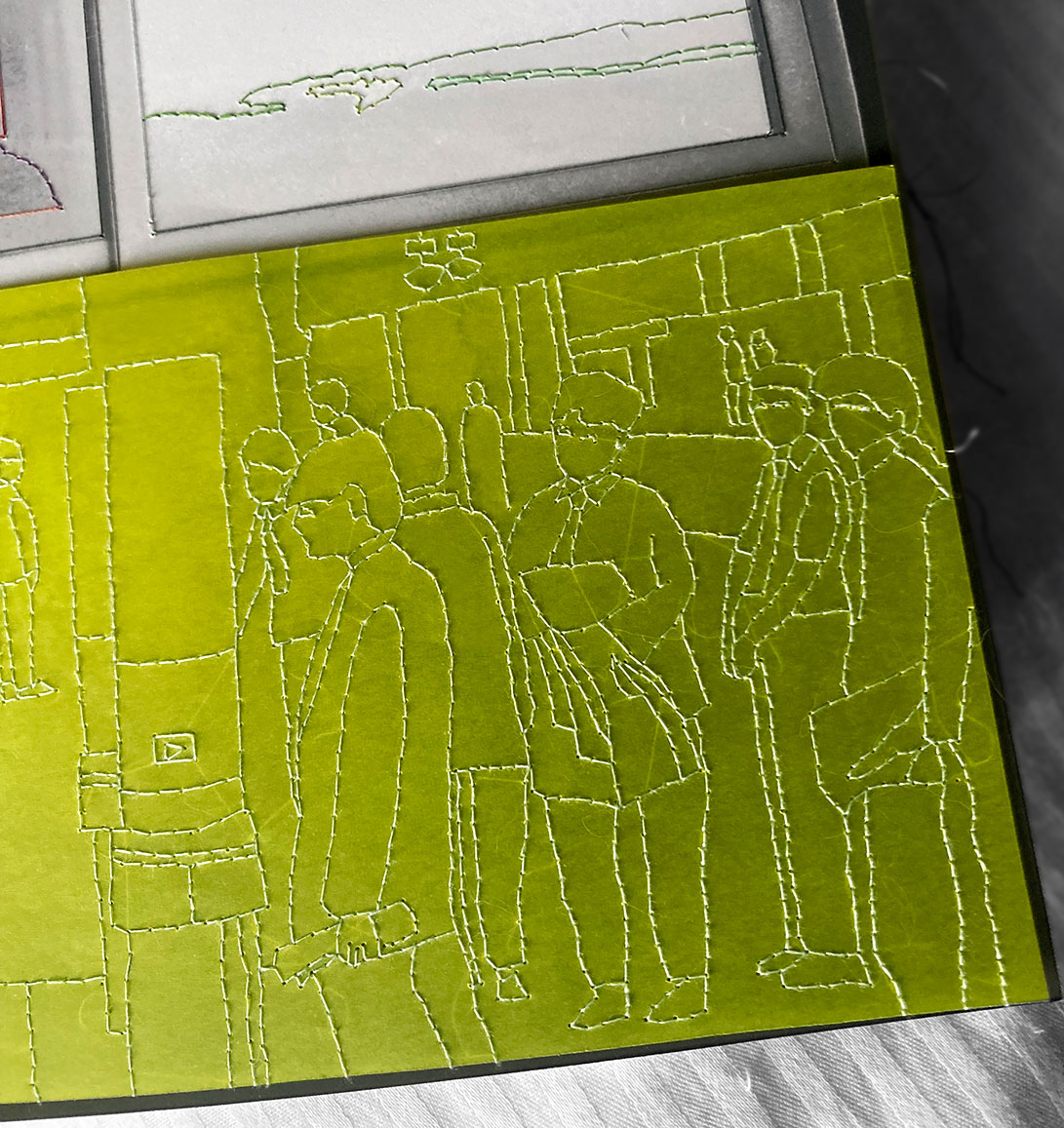
It’s almost a trance; it’s always like this. I laid a sheet of acid-green tracing paper over the bottom part of the photograph, like a thin layer of time settling on another. On that paper, in very pale blue, I embroidered a scene from the video. Japanese commuters standing still on the platform, caught in a collective gesture that speaks of cycles, repetition, and imposed rhythm.
By bringing these two temporalities together — the quiet darkness of the pinhole and the relentless flow of 1998 — the true heart of the work revealed itself. We are crossing a threshold. A profound shift that doesn’t sound like the catastrophes imagined in sci-fi series, but like the silent step of revolutions that unfold deep beneath the surface. The rise of AI—so often framed as a threat or dystopian nightmare — feels to me like an opening. A chance to slow down, to let go of old automatisms, to return to a more human pace, as long as we stay awake, present, responsible.
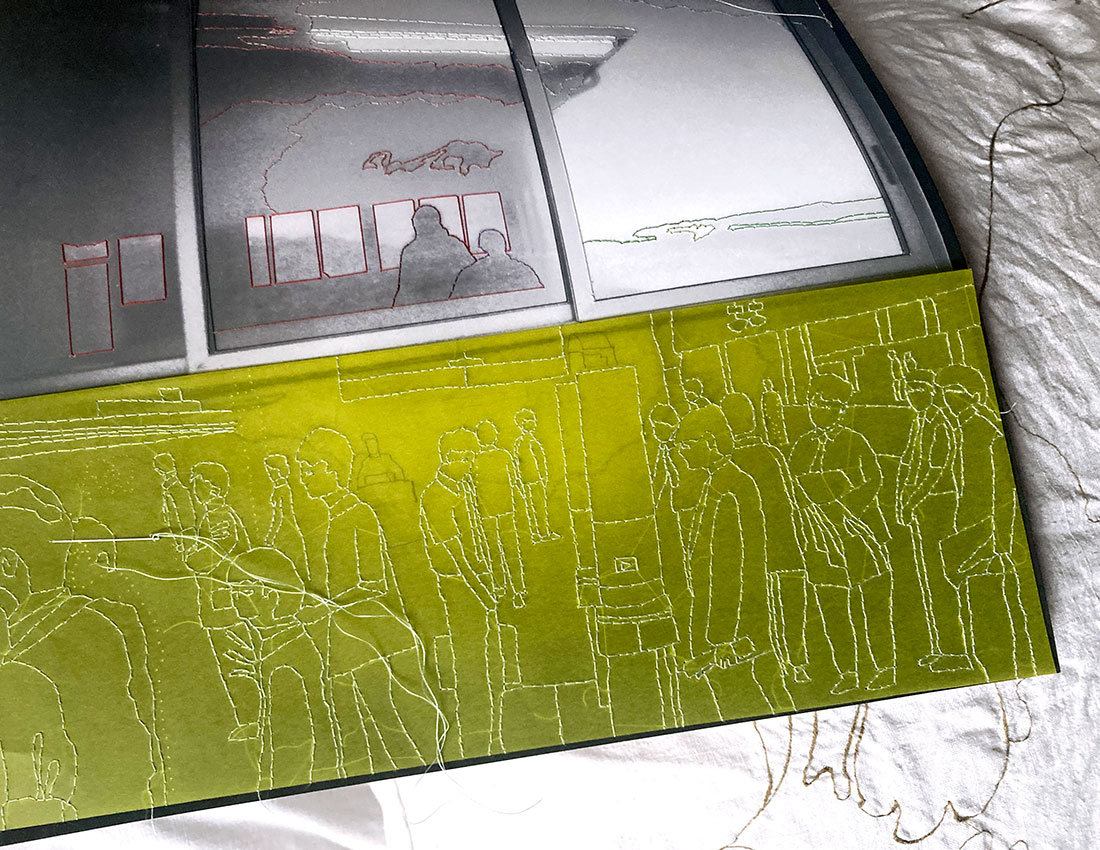
This embroidery is how I tell that story: a slowness that isn’t an escape, but a reboot. A transition that doesn’t scare me because I feel it clearly, intuitively, almost as something necessary. And so I move forward stitch by stitch, as if the thread itself had already intercepted the future and was simply charting its map.
In the in-between moments, I’m also working on another piece that explores the same theme from a different angle—another way of looking at this shift of eras, this slide into a new kind of time. The same transformation through another portal. Another interface, another language, another point where the human and the digital touch without clashing, bound by the deep need to merge. I’ll talk about it in an upcoming post, because it deserves its own space: it’s a work unfolding like Gibson’s urban landscapes—chaotic hybrid layers, decayed and decaying, contested by factions that seem incompatible at first glance.


Leave A Comment